
VTM showcases data-driven mobility expertise at Portugal’s premier Road & Rail Congress
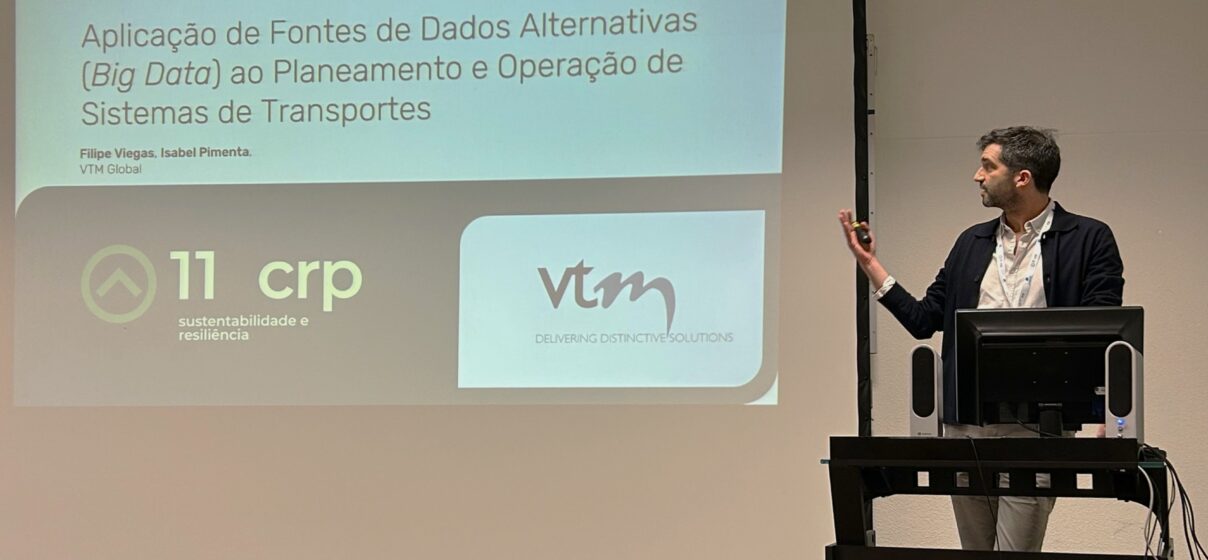
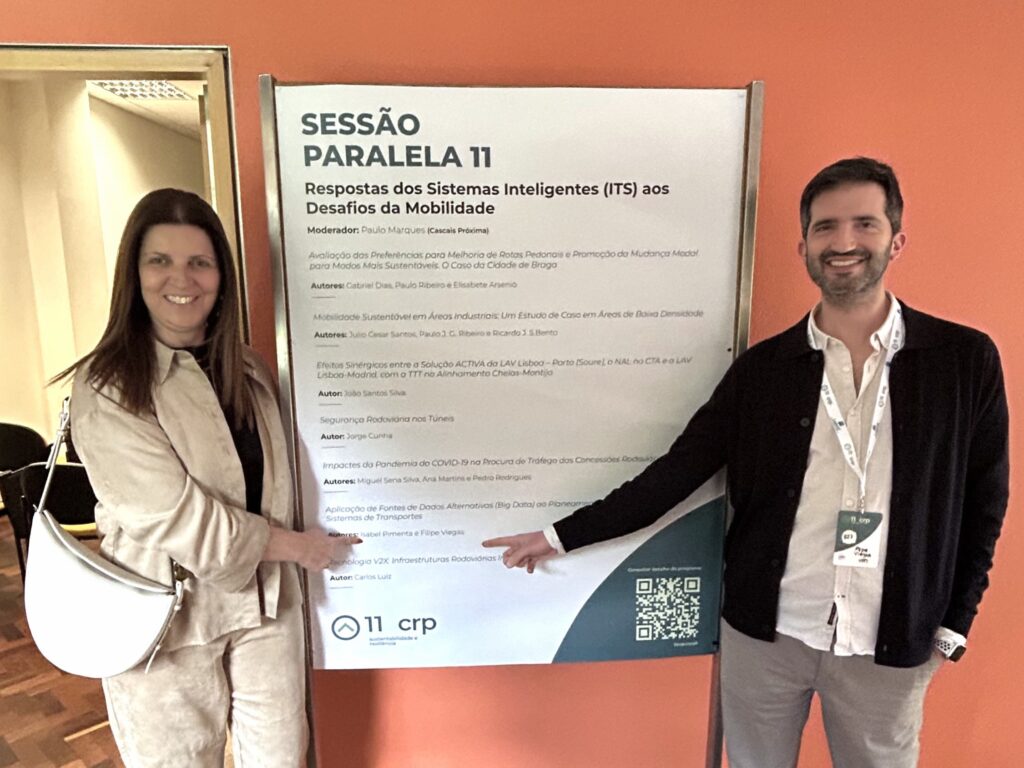
This Wednesday, during the second day of the 11th Congresso Rodoferroviário Português (CRP), VTM delivered two well-received technical papers to an audience of policy-makers, infrastructure owners and research leaders. The biennial congress – held 13-15 May at LNEC in Lisbon under the banner “Sustainability and Resilience”, with Mexico as the 2025 guest country – gathers Portugal’s road- and rail-engineering community to debate solutions for tomorrow’s mobility challenges.
Why this congress matters
CRP’s programme is organised around three headline themes and nine sub-themes, ranging from climate-ready infrastructure to Intelligent Transport Systems (ITS) and safety management. Within Theme 2: ITS responses to mobility challenges, VTM’s presentations stood out for translating complex datasets into actionable strategies – echoing the event’s call for resilient, tech-enabled transport.
1 Big Data for Better Planning & Operations
Presentation: “Application of Alternative Data Sources (Big Data) to Transport System Planning and Operations”
Authors & Speaker: Filipe Viegas (presenter) and Isabel Pimenta
Key insight: A single day now generates more mobility data than an entire year did a decade ago – yet most agencies still plan with yesterday’s tools.
Drawing on projects in Portugal and Mexico, Filipe and Isabel showed how blending sensor feeds, connected-vehicle logs, GPS traces, mobile-phone pings, Bluetooth detections and smart-ticketing records delivers a 360° view of travel behaviour. Case studies demonstrated how:
- Strategic planning gains accuracy when OD matrices are extracted from anonymised mobile data, revealing hidden demand corridors.
- Real-time operations improve when highway-authority control rooms fuse connected-vehicle data with roadside detectors to predict traffic queues 15 minutes earlier than before.
- Investment decisions are de-risked through corridor-level performance dashboards that flag interventions with the highest benefit-cost ratio.
The presentation highlighted the benefits of integrating non-traditional datasets into existing modelling workflows – underlining VTM’s role as a bridge between raw data and implementable policy.
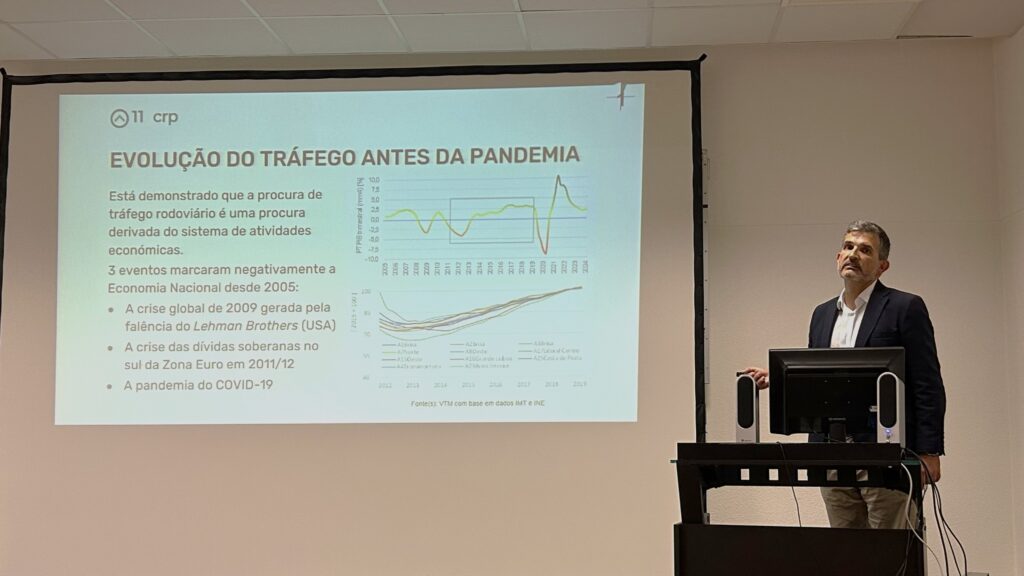
2 Traffic Demand Under COVID-19
Presentation: “Impacts of the COVID-19 Pandemic on Traffic Demand in Toll-Road Concessions”
Authors & Speaker: Miguel Sena e Silva (presenter), Pedro Rodrigues, Ana Martins
Headline figure: Traffic on some Portuguese concession roads plunged by up to 80 % at the pandemic’s peak.
Using econometric models calibrated for Portugal and Mexico, the team disentangled three forces: government restrictions, behavioural adaptations and macro-economic shocks. Results showed:
- Tele-work mandates explained 55-65% of initial volume loss, but only 30% of the lingering 2021 deficit.
- Elasticities differed by corridor type; urban commuter routes rebounded faster than long-distance tourism links.
- Concession-contract clauses and risk-sharing mechanisms shaped revenue impacts more than traffic alone – highlighting the value of contractual flexibility for future disruptive events.
The proposed methodology for isolating policy effects from “natural” demand changes has immediate application for concessionaires preparing post-pandemic traffic forecasts or negotiating compensation.
Take-aways for the industry
- Evidence beats intuition. Whether evaluating pandemic shocks or designing ITS, VTM leverages advanced analytics to inform infrastructure strategy.
- Data diversity is a strength. Fusing traditional counts with mobile and IoT sources produces richer insights and more robust decisions.
- Resilience requires preparation. Scenario-based modelling and flexible contracts help road operators weather future disruptions – pandemic or otherwise.
Looking ahead
By sharing concrete, data-driven solutions at Portugal’s leading road-and-rail forum, VTM reaffirmed its commitment to helping clients build smarter, more resilient and sustainable mobility systems worldwide. To explore how our consultancy can unlock value from your transport data get in touch with us.
Latest news
All news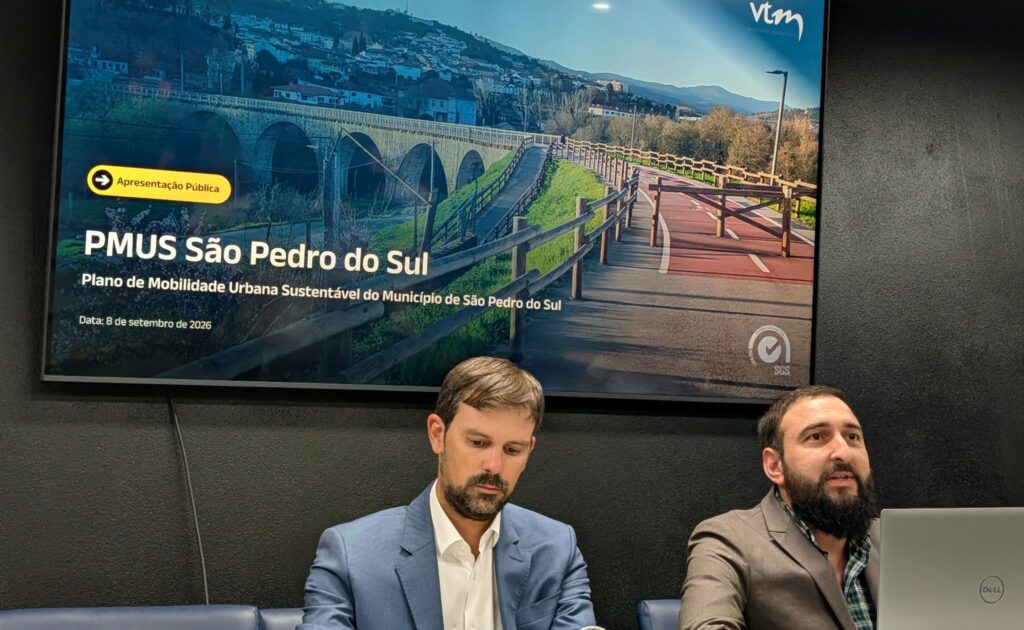
VTM Presents Sustainable Urban Mobility Plans for 5 Municipalities in Viseu Dão Lafões
Between 8 and 10 September, the municipalities of Carregal do Sal, Nelas, Penalva do Castelo, Santa Comba Dão and São Pedro do Sul hosted public presentation sessions for their respective Sustainable Urban Mobility Plans (SUMPs), which VTM is developing in collaboration with CIM Viseu Dão Lafões and the five municipalities. These sessions represented an important […]
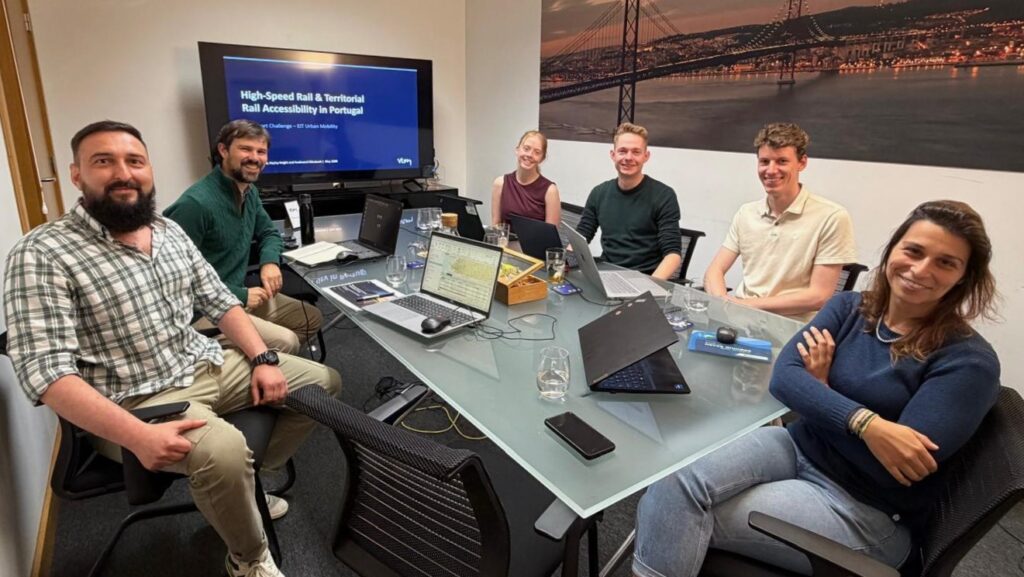
Collaborating for smarter mobility: VTM engages with EIT Urban Mobility students
This week, VTM had the pleasure of welcoming two groups of students from the International Master’s in Urban Mobility by EIT Urban Mobility, currently attending the first year of the programme in Lisbon at Instituto Superior Técnico and IGOT – Instituto de Geografia e Ordenamento do Território da Universidade de Lisboa. The meetings and presentations […]
